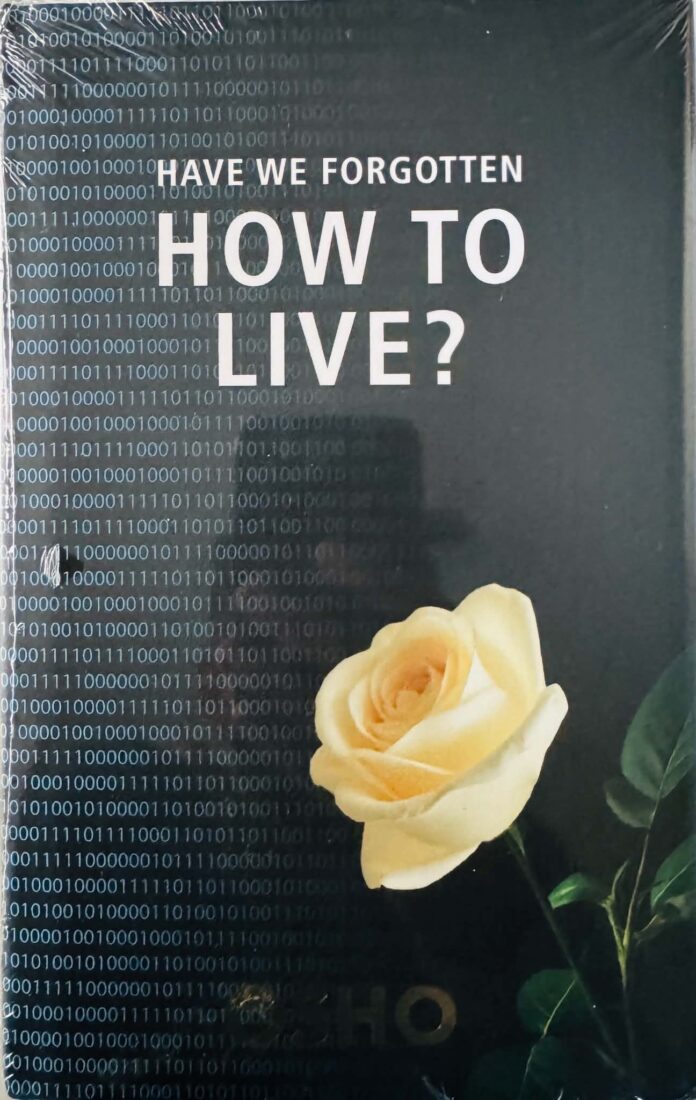
HAVE WE FORGOTTEN HOW TO LIVE?


HAVE WE FORGOTTEN HOW TO LIVE IS A BRAND-NEW RELEASE OF HINDI TRANSLATION: AMRIT DWAR

Have we forgotten how to live?

CONTENT OF: HAVE WE FORGOTTEN HOW TO LIVE

THE MYSTIC SAYS SOMETHING NEW WITH WELL-KNOWN WORDS


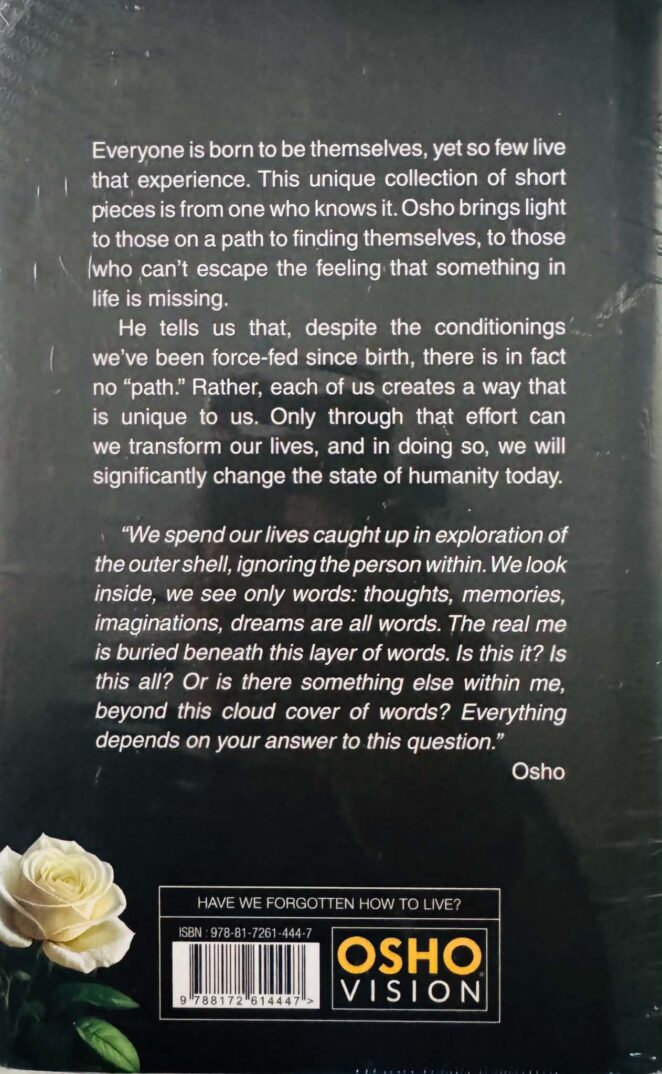
 “The words of the Mystic or Wise Human are the same as the words of the society. Besides this he has to say something of which society has no knowledge.
His language is the same as that which has been used for centuries—worn out and dusty. But he has to say something ever new, like the fresh dew of the morning, or the first rays of the morning sun! Old words are stale, rotten, worn out for centuries, worn out; he has to breathe life into them. He has to fill them with the truth that he has just learned—and which is always new and never grows old.”  Osho
Some of the main themes of the book:

* Science and spiritual superstition
* Love: the bridge between the world and God
* The formula for life transformation
* The difference between scripture and book

Have we forgotten how to live can be ordered at: Osho Books in Mumbai

Amrit Dwar (अमृत द्वार) is a Hindi book and a compilation of six foundational discourses delivered by Osho. The content serves as a spiritual manual to guide individuals toward inner transformation and self-realization.[1, 2, 3, 4]

Have we forgotten How To Live?


Have we forgotten how to live?

Have we forgotten How To Live?

A BEAUTIFUL STORY IN: AMRIT DWAR / HAVE WE FORGOTTEN HOW TO LIVE?

“Amrit Dwar” is a popular Hindi book based on Osho’s discourses. It contains a very popular and inspiring story that illustrates the importance of attitude and action.

THE IMPORTANCE OF ATTITUDE AND ACTION

The story goes like this: Once, a huge and magnificent temple was being built. A traveler passing by stopped to observe the construction. Numerous laborers and craftsmen were breaking and carving stones.
The traveler stopped and asked three different laborers the same question, “What are you doing?”
The first laborer stopped his hammer with great anger and irritation and looked at the traveler, “Are you blind? Can’t you see? I’m breaking stones.”
The second laborer looked up with a very sad and tired expression and said, “I’m not doing anything, just working to earn a living.”
The third laborer looked very happy. He was humming a sweet song as he broke stones. He looked at the traveler with a smile and said with joy, “I am not breaking any ordinary stone, I am building a grand and beautiful temple with my own hands!”
Moral of the story: Through this story, Osho explains that all three workers were doing the same work. But their attitude was completely different. The first person considered it a compulsion or punishment, the second considered it just a means of earning money, but the third person saw happiness, purpose and dedication in his work.
This book is considered very important for understanding spirituality and the right attitude towards life. You can read more about this book on OSHO World.